
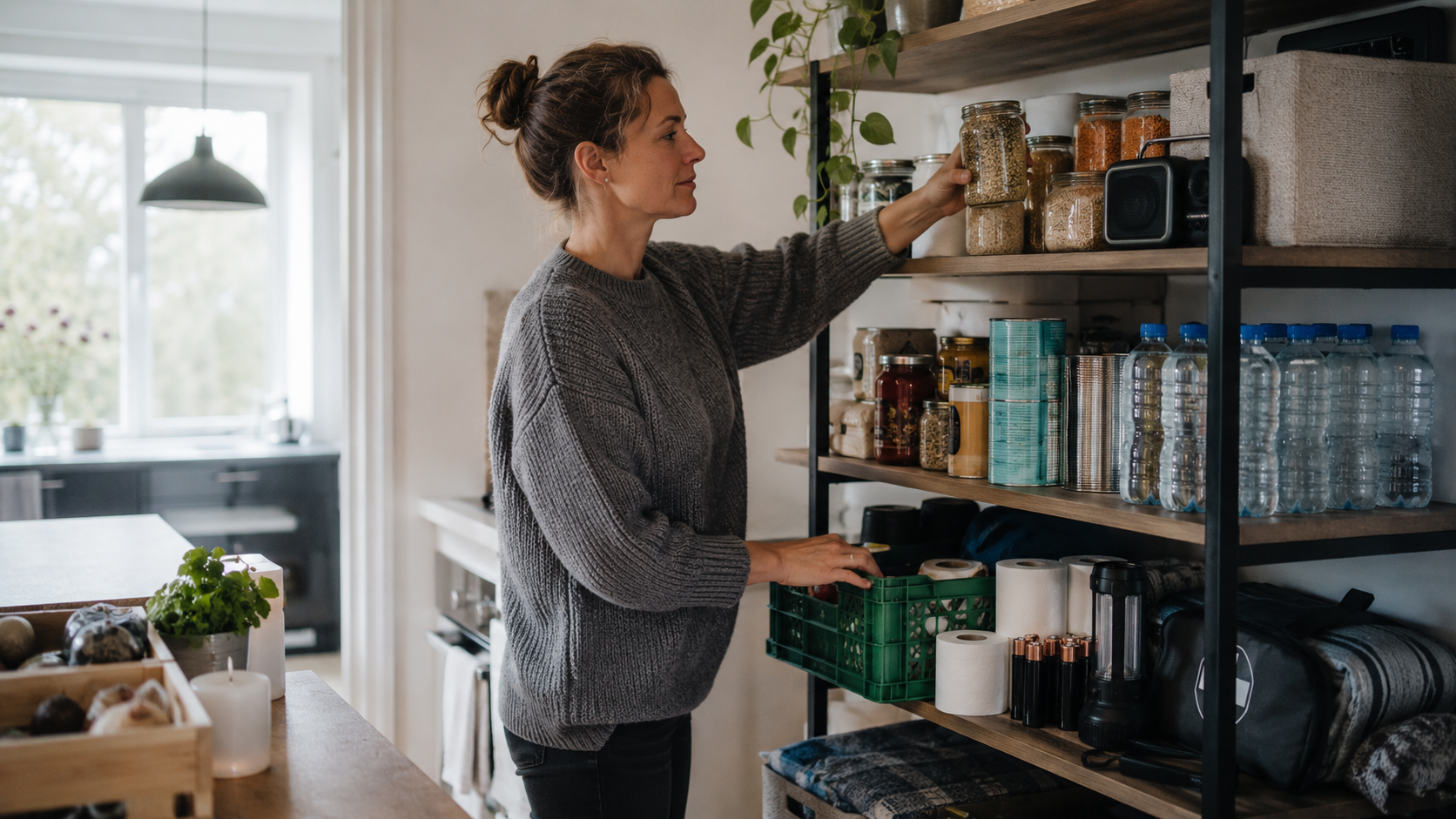
A 72-hour home preparedness setup is about making sure you and your household can manage on your own for three days if something unexpected happens. It does not mean you need to be able to handle every crisis alone. It simply means having the most important things in place, so the first few days become easier to manage.
In everyday life, we rarely think about how dependent we are on electricity, water, heat, internet access and payment systems. They just work. But if there is a longer power outage, problems with the water supply, extreme weather or technical breakdowns, even simple things can quickly become difficult.
That is why it makes sense to have a small home preparedness setup. Not as something dramatic, but as a practical form of everyday insurance. A bit like having a smoke alarm, a first aid kit or a spare key with a neighbour. You hope you will not need it, but you are glad to have it if the need arises.
The most important point is water. As a rule of thumb, you should plan for around 3 litres of water per person per day for drinking and simple food preparation. For three days, that equals around 9 litres per person. If there are four people in your household, that means around 36 litres in total. If you have pets, they should be included too.
Food is the next point. Here, it is useful to choose foods that last a long time and can be eaten without too much preparation. This could be tinned food, crispbread, oats, nuts, dried fruit, ready meals, soup or other things you actually like. A preparedness setup works best when it fits your everyday life.
It is also worth thinking about how you would manage if the power goes out. A torch is better than having to search for candles in the dark. Extra batteries and a charged power bank can make a big difference. A battery-powered, hand-crank or solar-powered radio can also be useful if the internet is down and you need information.
Hygiene quickly becomes important in a crisis situation. Toilet paper, wet wipes, hand sanitiser, rubbish bags, sanitary products, nappies and personal essentials can make the days much more comfortable. If anyone in the household depends on regular medication, this should also be included in your preparedness planning.
Heat is especially relevant in Denmark. During winter, a home can quickly start to feel cold if the heating stops working. Blankets, warm clothing and the option of gathering the family in one room can help a lot. If you use candles or alternative heat sources, you should always think about fire safety and ventilation.
A 72-hour preparedness setup does not need to be built all at once. Start with water, food and light. After that, you can gradually add the things that make sense for your household. The most important thing is to get started.
Once the basics are in place, it gives you peace of mind. You know that you can manage the first few days if everyday life is disrupted. That is exactly what a good home preparedness setup is meant to do.
0 Comments