
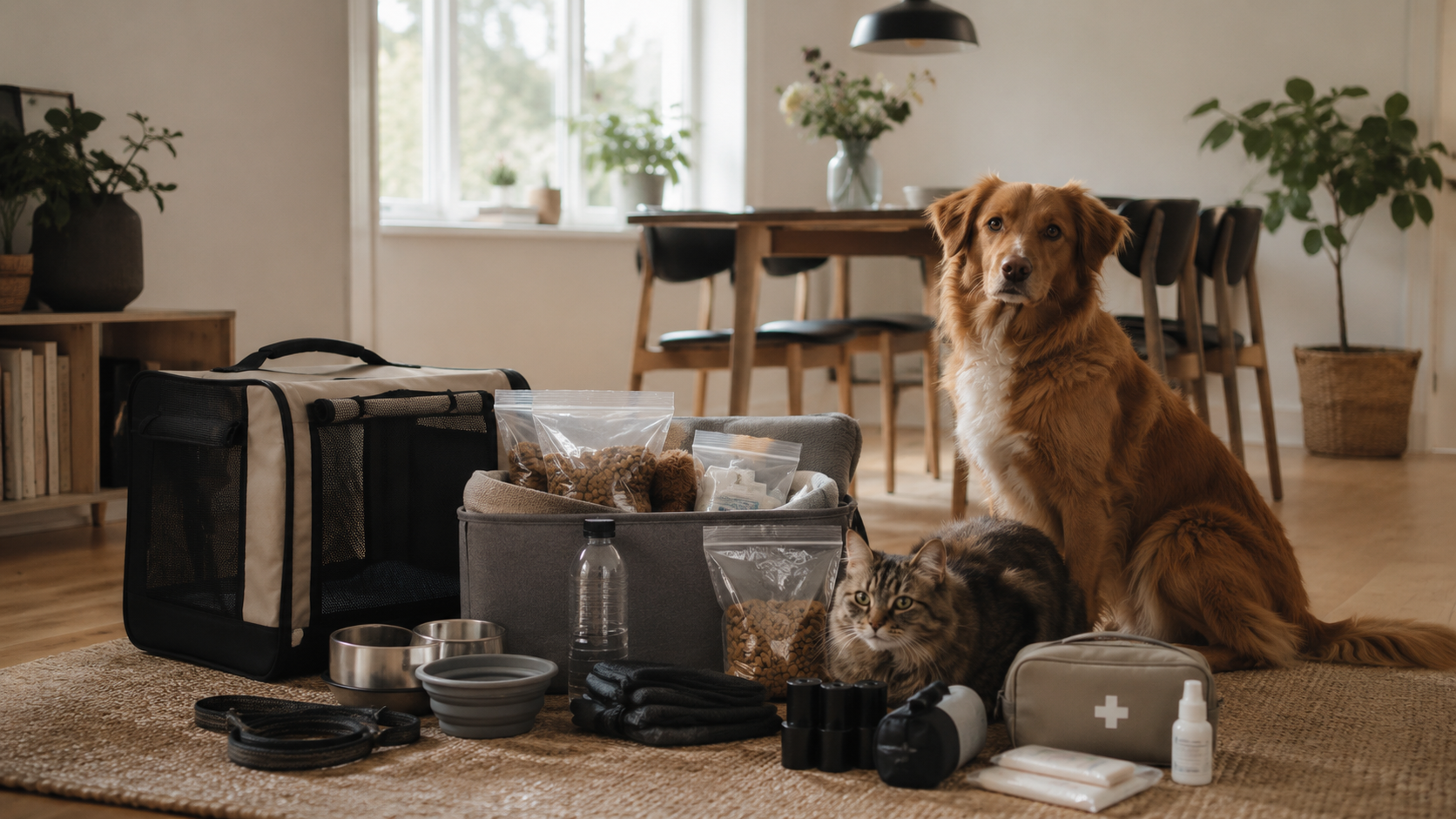
When people talk about home preparedness, most think about people first. Water, food, heat, power and medicine. But for many families, pets are a natural part of the household, and they should of course be included in your preparedness plans too.
Pet preparedness does not need to be complicated. First and foremost, it is about making sure your animal has what it needs if everyday life is disrupted for a few days. This could be during a power outage, extreme weather, illness, transport issues or a situation where you cannot simply go out and buy pet food as usual.
Start with food. Whether you have a dog, cat, rabbit, guinea pig or another animal, it is a good idea to keep extra food at home. Ideally, it should be the same food your pet is already used to. In a stressful situation, changing food at the same time is not ideal, as it can upset your pet’s stomach or add unnecessary stress.
Water is just as important. When you calculate water for your household, your pets should be included too. A large dog will naturally need more water than a cat or a smaller animal, so base it on your own pet’s needs. It is better to have a little too much than too little.
If your pet needs medication, special food or supplements, these should also be part of your preparedness supplies. They may be difficult to get hold of quickly if shops or vets have limited access. A small buffer can therefore provide a great deal of reassurance.
Transport is something many people think about too late. If you suddenly need to leave your home, it is important that you can bring your pet with you safely. For cats and smaller animals, the transport carrier should be easy to find. For dogs, the lead, harness and possibly a coat should have a fixed place. If you have animals in cages, it can be helpful to have a plan for how they can be moved safely.
Do not forget the practical items either. Cat litter, hay, bags, wet wipes, blankets, bowls and cleaning supplies can quickly become necessary. They may not be the most exciting things to think about, but they are often the things you miss first.
Pets can react strongly to unrest and changes in routine. New sounds, darkness, people moving around or an unfamiliar place can make them feel unsafe. Familiar items such as a blanket, toy, treats or a bed can help create a sense of calm. This is especially true for animals that are already nervous or very dependent on fixed routines.
It is also a good idea to gather important information. Write down your vet’s phone number and keep details about microchip numbers, vaccinations, insurance and any medical conditions. Keep this information both digitally and on paper. If your phone runs out of battery, it is good to still have access to the most important details.
Pet preparedness can easily be simple. A box, a bag or a fixed shelf with the most important items is often enough. The most important thing is that you know where it is, and that the contents are checked from time to time.
Preparing on behalf of your pet is simply a natural part of the responsibility you already have as a pet owner. You provide food, safety and care in everyday life. With a small preparedness setup, you can continue to do so when everyday life does not go quite as planned.
0 Comments